The Plexiglass Economy · Part 1 of 3
The Margin Math: $50 a Day of Theft Costs a Corner Store $42,000 in Extra Sales
Corner stores only have about 30% gross margins, so to break even on a $50/day theft, they have to sell more than $42,000 of incremental stuff. The devastating math of retail theft.
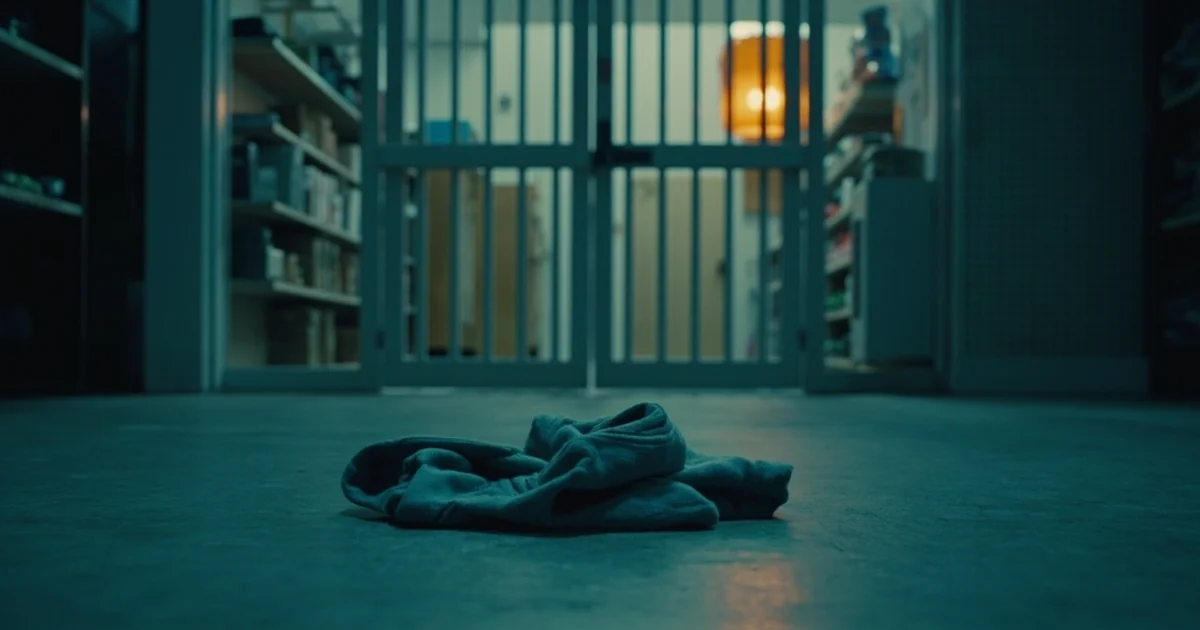
There was a Dollar General on Ridge and Sedgley in Strawberry Mansion, right next to the place I lived for two years, and it closed in 2024.
In the year preceding its closure, I used to go in a lot, usually to buy soda and household stuff like tin foil. The store was startlingly empty, you knew it was heading to bankruptcy or closure. The candy aisle had like three bags of candy (despite room for hundreds). The last time I was there, I saw a guy fill his backpack with Gatorade and walk out. He didn't even hide what he was doing. The checkout counter woman, twenty-something, saw and knew she couldn't do squat due to corporate policies and her own personal safety. So did all the customers at the store, myself included.
Did you know, Macy's loses half its operating profit to shrinkage
In its recent 2025 annual report, Macy's reported $22.6 billion of revenue with $1.03 billion of operating profit, which works out to a 4.6% operating margin, or just four dollars and sixty cents of profit for every hundred dollars of sales. That is tiny, and, importantly, not unusual in the world of retail. Retail is not big tech software, it's a razor-thin margin business.
Note that Macy's operating margin has to be adjusted for some technical stuff, so the real profit margin is only 3.1%, or about $700 million of operating income.
And that tiny 3% margin is hugely impacted by theft in a way that is hard to appreciate unless you've worked on the finance or loss prevention teams at a big retailer, which I presume you haven't (I haven't either). The National Retail Federation (the trade body for big retailers like Macy's) puts out an annual report that estimates the cost of theft. In 2022, the report estimated that shrinkage (the technical word for theft plus some other stuff) was 1.6% of sales. For every $100 of sales, $1.6 of stuff is stolen. Across the US retail industry that is about $112 billion of stuff stolen every year, or "shrinks," up from $94 billion the year before.
Macy's gross margin is about 40%, so the theft of a $50 item costs them about $30. Covering that $30 of gross profit takes $75 of additional sales, since $75 x 0.40 is $30, and the sales that replace a theft carry the gross margin because rent and payroll do not change when one more customer walks in. Divide by the 3.1% operating margin instead and the same theft takes $968 of sales, more than ten times what it actually takes.
Run that over a year and 1.6% shrinkage on $22.6 billion of revenue is $362 million of merchandise, half of the $702 million Macy's earns in operating profit. That is $217 million of gross profit, and covering it takes $543 million of additional sales, 2.4% of revenue.
A corner store loses more than its whole year's profit to $50 a day of theft
A corner store runs on about a 30% gross margin. The annual financial survey the National Grocers Association and Financial Management Solutions Group publish of independent grocers put gross margin at 27.4% and net profit at 1.9% for fiscal 2024, one to three cents of net profit on every dollar of sales, which NGA calls one of the thinnest profit margins in any industry.
Let's work with this representative example: a mom-and-pop grocery store selling $1,000 a day. Over a year that store sells $365,000 of stuff, makes about $110,000 of gross profit, and keeps around $10,000 of net profit after taxes. The owner is paying himself or herself like $50,000 a year while the family works more than 2,000 hours, and with the store's profit a family of three or four is taking home about $60,000 a year.
$50 of stuff stolen per day adds up to $18,250 over a year, which means they need to sell $42,583 more stuff to cover that loss (i.e., $116 more every single day). If they don't, their entire net profit is wiped out, and so is about 25% of that entire family's annual income. That 25% eats into rent, into their children's education, and many other essential things that grocer needs to support his or her family.
The response to theft costs more than the theft
Stores respond by making it harder to steal: they hire security, they lock the coolers, they move the razor blades and the baby formula behind cases, and they put a sheet of plexiglass between the clerk and the customer.
The Bureau of Labor Statistics puts the mean annual wage for security guards in the Philadelphia metro at $42,180, so a half-time guard is $21,090 a year. Covering that at a 30% gross margin takes $70,300 of sales, against the $42,583 it takes to replace a year of $50-a-day theft. The guard costs more than the theft for a mom-and-pop, so they don't hire them. CVS does because it makes sense for them, as does Macy's and pretty much every big box retailer operating in high theft areas. Or they just shut down.
I live in Fairmount now, a few blocks from the Rite Aid that closed in 2025 when the company liquidated every store it had. By the time the bankruptcy came, pretty much everything from high value make-up to $5 bags of candy had already moved behind plexiglass cages due to the rampant theft.
The margin math is painful
The point of this essay is to lay the mathematical foundation of the two essays to follow. Business is fundamentally driven by an owner's ability to turn a profit, whether that owner is the public shareholders of a billion dollar corporation or the immigrant who doesn't speak a lick of English and is working 80-hour weeks in a tiny retail plexiglass cage to keep his or her family housed, fed and safe.
*This is the first piece in a series I'm writing on the normalization and impact of retail theft. I'll be publishing several articles on this topic over the coming months.
Notes, Sources, and Methodology
Macy's figures are from the fiscal 2025 8-K exhibit filed March 18, 2026, for the 52 weeks ended January 31, 2026. Operating margin is on total revenue, Macy's own basis. The reported $1,030 million of operating income includes $328 million from the interchange fee settlement, income rather than a cost, so the 3.1% margin is what remains. Gross margin is net sales less cost of sales: 38.0% of net sales, 40.3% of total revenue.
The recovery arithmetic runs on the gross margin rather than the operating or net margin, because the sales that replace a theft carry the gross margin: rent and payroll do not change when one more customer walks in. Dividing by the operating margin overstates it by more than ten times.
The shrinkage rate and the $112.1 billion total are from NRF's National Retail Security Survey, its last annual shrink figure. Grocery margins are from the 2025 FMS/NGA Independent Grocers Financial Report (fiscal 2024), industry averages rather than Philadelphia figures, and the one to three cents on the dollar is the National Grocers Association's own description. Guard wages are from BLS Occupational Employment and Wage Statistics for the Philadelphia metro area; the half-time figure assumes 20 hours a week.
The corner store is a representative example on this series' assumed margins, not a measured store: $1,000 a day, $365,000 a year, about $110,000 of gross profit at a 30% gross margin, and about $10,000 of net profit after taxes. The owner's $50,000 a year is a draw on the business, below the profit line, so the household takes home about $60,000. The license data counts licenses rather than storefronts and misses chains like Dollar General and Rite Aid; nothing here establishes why a particular store closed. Canonical dataset: analysis/data/plexiglass_facts.json.
https://nickjain.com/blog/the-margin-math