Why Cities Need Weird People
Conformity is efficient. Weirdness is generative. The economic case for cultivating misfits.
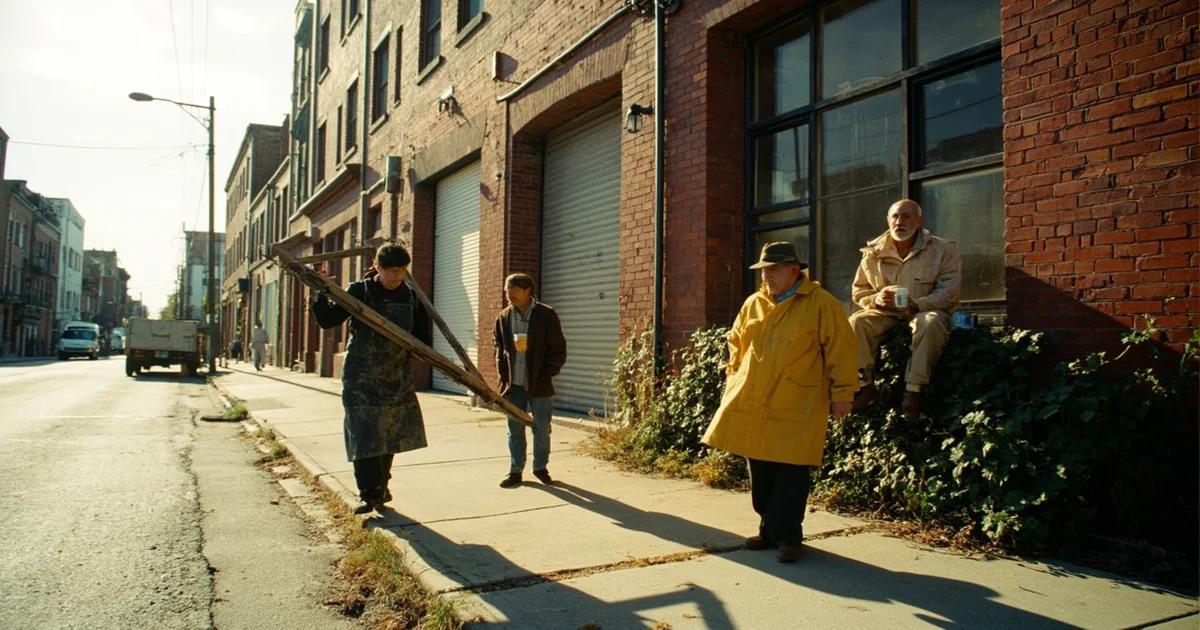
If everyone fits, no one innovates. This is not a feel-good platitude. It is the most important thing a city planner could understand, and it is almost universally ignored.
By weird, I do not mean eccentric for its own sake. I mean people whose preferences, working styles, ambitions, or identities sit far enough outside the local norm that they create things the norm would not.
Conformity is efficient. When everyone thinks the same way, decisions are faster, coordination is easier, and execution is smoother. The conforming worker shows up on time, does what is expected, and produces predictable output. The conforming neighborhood stays in its lane: residential here, commercial there, nothing to surprise anyone.
But efficiency is not the same as resilience. And predictability is not the same as prosperity. Cities that optimize for conformity get very good at doing the same thing repeatedly. They do not get good at doing new things.
Cities talk constantly about attracting employers and talent. Very few talk about preserving the conditions that allow unusual people to create value before anyone recognizes it. This is not gentrification as a moral problem. It is gentrification as a coordination failure: the city captures value from pioneers but does not reinvest in preserving the conditions that created them.
The productivity of misalignment
Weird people solve problems conformists do not see. This is not because weird people are smarter. Many of them are not. It is because they experience the world differently. They walk into a room designed for normal purposes and notice the inefficiencies, the waste, the unspoken assumptions that everyone else has learned to ignore.
The conformist sees a co-working space and thinks: this is a nice place to work. The weird person sees the same space and thinks: this is a building designed for solitude in which people have been forced into interaction by proximity, and the acoustics are terrible, and no one has anywhere to think out loud. The conformist sees a zoning code. The weirdo sees an optimization function that excludes exactly the uses the city actually needs.
These observations are not inherently productive. But they are the raw material of productivity. You cannot fix what you do not notice. And you cannot notice what looks normal to you.
The economic case for weirdness
Here is a pattern that shows up repeatedly in cities: the most economically productive neighborhoods in American history were not built by planners. They were built by people who could not afford to live anywhere else.
Berlin in the 1990s is the clearest case. When the wall fell, the city was broke, the infrastructure was crumbling, and no one with money wanted to live there. Rent was practically free. Into that vacuum came artists, musicians, poets, and assorted misfits from across Europe (people who could not have afforded to live in London or Paris or New York, people whose work was too strange for any conventional art market).
They filled abandoned buildings. They threw parties in warehouses. They opened clubs in basements. They created a scene distinctive enough that people started moving to Berlin for reasons unrelated to work.
Twenty years later, Berlin is a tech hub. Not because anyone planned it that way (the German government's attempts to engineer a startup scene were laughably ineffective) but because the weirdos came first and the engineers followed. The tech community moved to Berlin for the same reason the artists had: it was the only place they could afford to be. And by the time the engineers arrived, the artists had already built the bars and the clubs and the cultural infrastructure that made the city livable.
Creative communities and high-growth industries often appear in sequence because both value experimentation, low barriers to entry, and tolerance for unusual people. The sequence matters.
The city that chases out its weird people is not making a cultural choice. It is making an economic error.
The Greenwich Village proof
The same pattern played out in Manhattan, forty years earlier. Greenwich Village in the 1940s and 1950s was not a financial district. It was a haven for writers who could not make rent anywhere sensible: Jack Kerouac, Allen Ginsberg, William S. Burroughs, the entire Beat generation. They lived in basement apartments, they smoked in coffee shops, and they wrote literature that no mainstream publisher would touch.
They were not building an economy. They were surviving. But the culture they built (the open-mindedness, the tolerance for difference, the expectation that strangers would talk to each other) became the defining feature of the neighborhood. And when the financial industry exploded in the 1980s, the money stayed on Wall Street, where it had always been. But young bankers wanted to live where the culture was, downtown, in the Village, where artists had already proven that strange people could coexist.
This is the mechanism, stripped of romance: weirdos are the only people who will move into a neighborhood that is cheap enough to be dangerous. They are the pioneer species. They establish the cultural substrate (the coffee shops, the underground venues, the norms of social openness) that makes a place livable for everyone else. Then the rest arrive, and the rents go up, and the weirdos get pushed out to the next affordable frontier.
Austin: the contemporary example
Austin, Texas, is watching this happen in real time. In the 1990s, Austin was a small college town with a music scene (the live music capital of the world, if you believed the billboards, which no one did except the people who lived there). It attracted people who did not fit Houston or Dallas: the misfits, the dropouts, the people who'd been fired from corporate jobs for insisting on working strange hours and wearing unusual clothes.
In 2010, Dell employed over 10,000 people in the Austin metro area, spread across its Round Rock headquarters and Austin campuses. The company was the largest private-sector employer in the city. Its corporate culture (formal, hierarchical, suits-and-ties) could not have been more different from the punk-rock ethos that had defined South Congress for twenty years. But the workers who Dell hired did not move to Round Rock. They moved to South Congress. They rented the same bungalows, shopped at the same antique stores, drank at the same bars. They did not come for the music. They came for the culture that the music had created.
Today, Austin is one of the most expensive housing markets in America. The artists who made the culture possible can no longer afford to live there. And the city is experiencing what happens when you optimize a place for the people who arrive last: you lose the thing that made it worth arriving at in the first place.
What happens in Philadelphia
Fishtown was not the first (Northern Liberties got there first, artists moving into abandoned industrial spaces in the late 1970s and 1980s). Fishtown came later, as spillover from neighborhoods that had already become too expensive. But by twenty years ago it was the frontier, sitting just far enough past the edge of Center City that the elevated train line made it everyone's problem but no one's opportunity. Artists moved there because they could afford the studio space and because no one would bother them.
Then came the restaurants. Then came the coffee shops. Then came the young couples who had read about Fishtown in magazine articles. Then came the renderings. Then came the six-figure condos. And now the artists who made the neighborhood interesting are living in Kensington, or Frankford, or somewhere further out on the El, chasing the same affordable frontier that every generation of weirdos has chased before them.
The same cycle is repeating in Graduate Hospital. It will repeat wherever the weirdos go next, because the weirdos always go somewhere, and the rest of the city always follows, and the economic model of urban development is built on the assumption that cities can extract value from the pioneers without investing in their retention.
The question every city should ask
There is no shortage of analyses of what gentrification does to neighborhoods. What is missing is an understanding of what neighborhoods do without weird people.
The answer is not that neighborhoods die. They do not. They become cleaner, richer, safer, and easier to manage. They also become more predictable.
And predictable places rarely invent the future.
But I know what happens when cities stop pretending it is not happening. I know what happens when they acknowledge that the most economically productive people in any city are the ones who could not afford to live anywhere else, because they are the ones who have the least to lose and the most to prove. They are the ones who notice the problems. They are the ones who try the solutions. And they are the ones who, one by one, get priced out of the neighborhoods they built.
Every city needs weird people. Not because they are charming or authentic. They are the people willing to try things before success exists.
When the neighborhood becomes desirable, the weirdos are already three neighborhoods over, starting again.
https://nickjain.com/blog/why-cities-need-weird-people