A Bot Counted Philadelphia's Tax Abatements. The City Reformed the Program and the Loss Doubled Anyway.
An engineer built a Twitter bot to tweet out Philadelphia's tax-abated properties one at a time, with the revenue each one cost. City Council reformed the abatement in December 2019. The City's revenue loss more than doubled anyway.
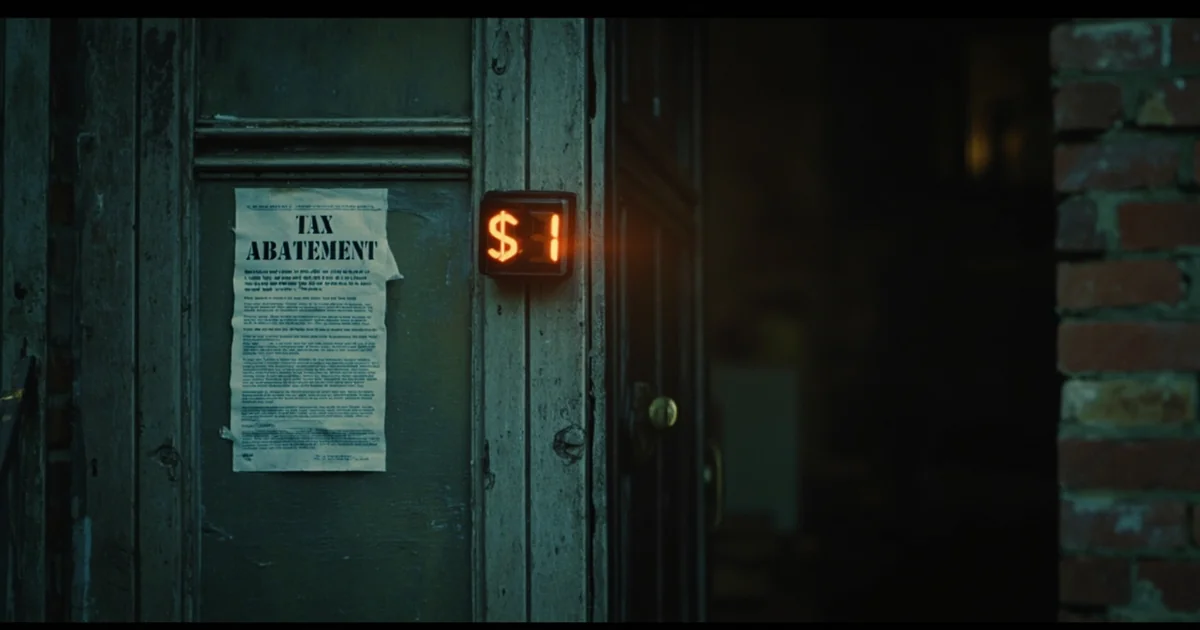
A Twitter account posted one property at a time, with the tax revenue each one was keeping from the City of Philadelphia. One of them was 1919-43 Market Street, which the bot put at $1,574,447 a year. The account was @PhillyTaxAbatement, and the person behind it was a software engineer named Nat Lownes, who said he had put it together over a weekend.
Philadelphia's 10-year tax abatement lets a developer skip property tax on the value of new construction for a decade. Lownes had long assumed the program was mostly benefiting "well-off homeowners in a few neighborhoods," and he only went looking after Mayor Kenney's March 2018 budget address. Kenney proposed raising the property tax rate, and Lownes was sure the speech would mention reforming the abatement at the very least. It did not.
The City Controller's analysis came out on April 20, 2018, and it named the neighborhoods. Graduate Hospital had 1,424 actively abated properties, Rittenhouse 1,346, Northern Liberties 1,009, Point Breeze 805, Fishtown 799. Those are the same five Lownes had already named.
The Controller counted 14,345 properties with abatements running and $6.674 billion of assessed value abated. The cumulative tax benefit since 2000, across everything the program had touched by then, was $1.05 billion.
Council passed a reform in December 2019. The phase-down only reaches applications filed after 2021.
The bot's purpose was electoral. Lownes said he meant to keep it tweeting right up to the polls closing on November 5, 2019, in the hope of electing "a mayor and a city council willing to end the tax abatement." In December 2019, City Council voted unanimously to pass Bill 190944-A. New residential construction now phases out: 100% abated in the first year, 90% in the second, and so on until the eleventh year, when the full tax gets paid. The bill kept the full ten-year exemption for rehabilitation and left commercial development on its own program. Councilmember Helen Gym called it "the first step" and said "this is not over."
The schedule reaches forward only. Under Philadelphia Code § 19-1303.4(5)(a), an application filed on or before December 31, 2021 gets the full hundred percent for ten years. The phase-down in (5)(b) applies to the applications filed after it.
Since FY2017 the City has published what its abatements cost, in a note to its financial statements.
I pulled the tax abatements note out of the City's annual financial reports for FY2017 through FY2025 and added up the line. Nine fiscal years, $748.2 million in foregone revenue, against the $1.05 billion the Controller counted for the whole program since 2000. (City revenue only. The School District of Philadelphia's loss is a separate number: Good Jobs First put it at $112 million of net foregone revenue in FY2019, the largest of any district in the country.)
The City gave up $43.4 million in property tax revenue to abatements in FY2017. It gave up $118.8 million in FY2025. The line has not fallen in a single year since.
Notes, Sources, and Methodology
The Controller's figures come from the City Controller's An Analysis of Tax Abatements in Philadelphia (April 20, 2018), built on Office of Property Assessment parcel data certified March 31, 2017. The bot, the $1,574,447 figure and the quotes from Nat Lownes are from Hidden City Philadelphia's write-up of the bot (September 2018); the December 2019 vote is covered in Hidden City's reform fight. The exemption schedule is Philadelphia Code Sec. 19-1303.4(5), added by Bill 190944-A in December 2019 and amended by Bill 200573 in January 2021. The yearly foregone-revenue figures are the City of Philadelphia's Comprehensive Annual Financial Report, Note on Tax Abatements, FY2017 through FY2025. The $112 million school-district figure is Good Jobs First's Abating Our Future (2021).
Methodology details. Each year's figure is the sum of the four program lines in that year's note. The series starts at FY2017 because that is when the City adopted GASB Statement No. 77, and it is City revenue only. The bot's per-property figure is its own: the improvement assessment times the 1.4% city property tax rate, which Lownes called "a simplistic calculation" that he believed approximated the amount that would have been collected. The @PhillyTaxAbatement account is no longer active; Hidden City's write-up is the primary record of what it did.
Limitations. No parcel-level abatement table is published. OPA's exemption field merges the 10-year abatement with the homestead exemption and fully exempt public property, so the $1,574,447 cannot be reproduced independently and is quoted as Hidden City reported it. The Controller's counts describe properties in their abatement window as of March 31, 2017. The Controller's cumulative $1.05 billion and the CAFR series overlap in FY2017 and are not additive.
https://nickjain.com/blog/tax-abatement-twitter-bot