The 30th Street Station at 6am
I take the 6am train out of Philadelphia a few times a month. Here's what I've noticed about the station and the ritual of leaving.
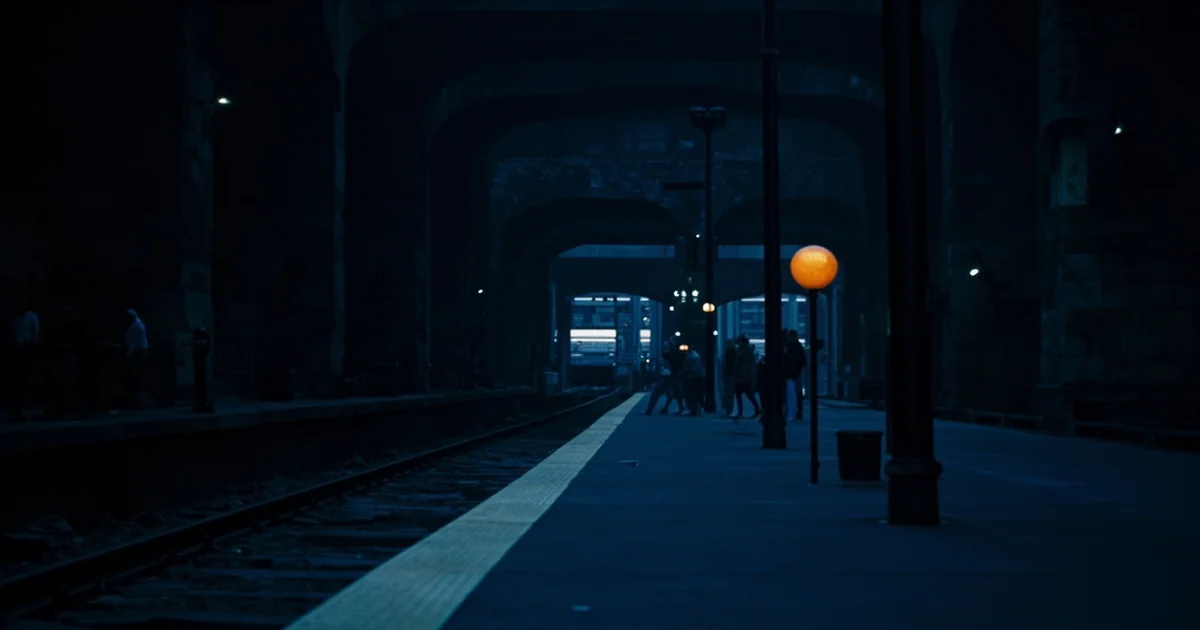
I take the 6am train out of Philadelphia a few times a month. It's the kind of thing you do when you're running a company remotely and need to be in a room with people who are also running companies remotely — a few times a quarter, a conference, a partner meeting, something that requires presence rather than a screen. The 6am train gets me there by mid-morning without needing to fly, which means I avoid airports, which is its own reward.
To make the 6am, I leave my house at 5:15. That's early enough that the city looks like it did when I went to sleep — quiet, mostly dark, the light just starting to change at the edges. By the time I get to 30th Street Station, it's still dark, or just barely not. The station is nearly empty at that hour. A few security guards, a couple of other travelers, the janitorial staff doing their thing. The kind of quiet that makes you feel like you've got the whole building to yourself, which is a feeling I find myself wanting more than I expected to.
The Renovation
The station was recently renovated. Half the great hall is beautiful now — high ceilings, light coming in from the windows that were always there but now actually visible, the architecture you don't expect from American rail that harkens back to the era when trains were the thing, when movement between cities was an event and not a logistics problem. It's classic rather than modern, which is the right call for a building of that age. They didn't try to make it look like a tech office. They just restored what was there and made it work again.
The other half is still under renovation, which means there's a fence and some construction and the reminder that "recently renovated" doesn't mean "completely done." I find this more interesting than frustrating — the station is in progress, which is an accurate description of most things worth caring about.
The basement waiting area, where the trains actually come in, is cold. Not catastrophically cold, not the kind of cold that makes you think about frostbite. Just cold — the way it is when a building has high ceilings and good ventilation and hasn't prioritized warmth in the seating areas because the people who designed it expected you to be on the train, not waiting on the train. You wait downstairs, you shiver a little, you read something on your phone, and then the train is announced and you move toward it and the cold stops being relevant.
The Train Cars
There's a persistent mystery about which car is first class, which is business class, which is regular class, which has the quiet car, and which of the cars have doors that open automatically versus doors you have to manually operate by pressing a button or pulling a handle or standing very close to them and making eye contact with the door in a way that suggests you understand its social cues. I have been taking the 6am train for two years and I still don't fully understand the car taxonomy. I pick a car that seems plausible and go with it. Usually I'm fine. Occasionally I'm in the wrong car and have to walk through several cars to get to the right one, which is fine except when the train is moving and the hallways between cars are narrow and I'm carrying a bag and feeling self-conscious about the minor confusion I'm causing.
This is a small thing but I mention it because it represents the kind of friction that persists in older transit systems — the information architecture is unclear, the signage is optimized for people who already know the system rather than people who are learning it, and the result is that every first-time rider has a slightly confused experience that doesn't rise to the level of a complaint but doesn't rise to the level of ease either. Amtrak should fix this. They won't. It's fine. I'll keep taking the 6am train.
On Time
The thing I've noticed that I didn't expect: the trains actually run on time. Not always, but more often than SEPTA, and there's something quietly satisfying about that. I know this isn't a high bar. I know that "runs on time" should be the baseline and not the exception. But I also know that it isn't the baseline, for most transit, and the 6am Amtrak departure has gotten me where I needed to be more often than not, with the schedule it said it would run.
The other passengers at 6am are a quiet community. Business people, mostly. People who travel for work and have done it enough to know what they need — coffee in a travel mug, a bag that's small enough to not need to be checked, noise-canceling headphones that they put on immediately and don't take off until the train is moving. We don't talk to each other. We acknowledge each other's presence with small gestures — a nod, a brief eye contact, a step aside in the hallway — and then go back to being alone. There's something nice about that. The city is full of people in proximity who are all doing their own thing, and the 6am train is just the adult version of the same: people who are going somewhere together but separately, in the same direction, on the same schedule.
The city at 6am is different from the city at 8am. You already know that if you've been up at both. But the train makes it concrete — the 6am city is the one you remember before it becomes the 8am city, and I've grown to like that window. Not for the destination, though the destination is fine. For the window itself.
The same hour, on the days I’m not leaving the city, belongs to a solo run through Fairmount Park with my son in the stroller. The window is the thing. Everything else is optional.