Part 7 of 8 in How Philly Taxes You
The 10% Vacant Lot Tax
Philadelphia § 19-2504 taxes vacant lots at 10% — the highest rate in the US. The law is on the books but applies to less than 1% of parcels.
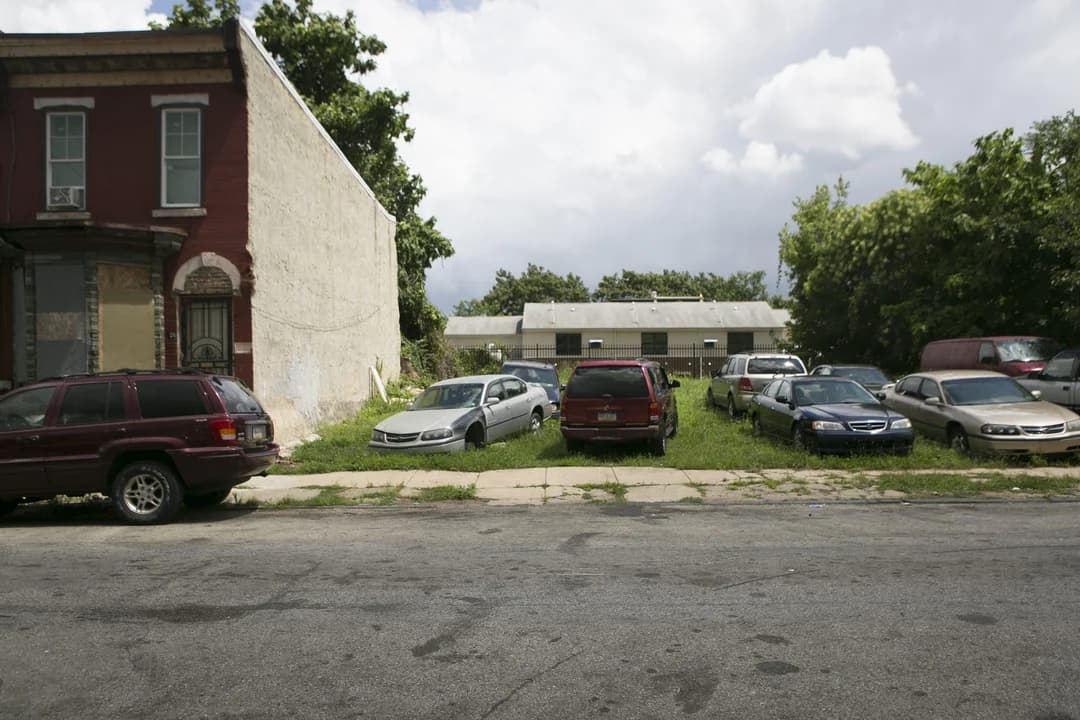
Read § 19-2503 of the Philadelphia Code and you will find a two-tier tax that no other American city has matched. Property classified as “abandoned” in Philadelphia is taxed at 5% of its assessed value, on top of the regular real estate tax. Property classified as a “vacant lot” is taxed at 10%. The 10% rate on vacant lots ties Washington, DC’s 10% rate on blighted property (Class 4) as the highest published percentage-based vacancy surcharge in any major US city — and is the highest rate specifically on vacant lots (rather than blighted structures) of any city surveyed. The original ordinance, passed in 2000, was designed to punish long-term land speculation by making it expensive to hold vacant property indefinitely.
To put the rate in context: Philadelphia’s regular real estate tax is 1.3998% of assessed value. The 10% vacant lot tax is more than seven times higher. For a vacant lot assessed at, say, $50,000, the annual vacant-lot tax bill is $5,000 — on top of the regular real estate tax of around $700. For a vacant lot assessed at $200,000, the vacant-lot tax is $20,000 a year. The penalty is not symbolic. The penalty is meant to make holding vacant land uneconomic.
The mechanism is the city’s Vacant Property Registry. Property owners of lots that meet the city’s definition of “vacant” are required to register, pay the surcharge, and either develop the property or sell it to someone who will. Failure to register or pay results in liens, fines, and eventually sheriff’s sale. The intent is to clear the inventory of vacant land that has been held for speculation, often for decades, by owners who are paying minimal carrying costs.
A 2022 Pew Charitable Trusts report on Philadelphia property taxation noted that the vacant property tax, while structurally significant, applies to a small fraction of the city’s total parcels. Less than 1% of parcels in Philadelphia are classified as vacant lots subject to the 10% rate. The revenue generated is meaningful but not transformative. The 5% abandoned property rate applies to a larger inventory, mostly blighted rowhouses and chronically distressed commercial properties.
The rarity of invocation is the more interesting story. The 10% rate is the highest in the country. The mechanism to apply it exists. The classification criteria are spelled out. The enforcement mechanism is in place. And yet less than 1% of parcels are subject to it. The reason is procedural: classifying a property as vacant requires inspection, documentation, and an administrative determination that the property meets the statutory criteria. The Department of Licenses and Inspections, which administers the registry, has limited staff. The classification process is slow. The appeals process is robust. The result is a tax that is on the books at the highest rate in the country but that applies to a small slice of the inventory.
A Penn IUR study estimated that vacant parcels in Philadelphia reduce surrounding property values by an aggregate of $3.6 billion, cost the city more than $20 million a year in maintenance, and produce public health and safety costs that are difficult to quantify. The vacant property tax is one of the policy tools the city has deployed against this inventory. The other tools include the Land Bank, the Keystone Opportunity Zones, the basic systems repair grants, and a series of demolition and stabilization programs. The 10% rate is the most aggressive of these tools. It is also the least used.
The structural argument for keeping the 10% rate is that it sets a ceiling. Property owners who know that the 10% rate exists are more likely to either develop their land, sell it to a developer, or donate it to the Land Bank, before the classification process catches up with them. The threat is the policy. The actual collections are a small fraction of the threat. Whether the threat has actually moved the inventory is a real empirical question, and the answer is: somewhat. The number of vacant lots in Philadelphia has fallen over the last decade, but so has the number in most American cities, and the relative contribution of the 10% tax rate to that decline is hard to isolate.
What I find most interesting is the rate itself. 10% is not a number that anyone arrived at by accident. It is a number that was chosen to be punitive. It is a number that was chosen to make land speculation uneconomic. It is a number that, in the abstract, says: this city is serious about vacant land, and we will tax it until you do something with it. The fact that the rate is rarely applied does not change the fact that the rate is on the books. The Code says 10%. The Code is the highest in the country. The Code is the threat.