Part 6 of 8 in How Philly Taxes You
The $2.00 Cigarette Tax Nobody Mentions
Philadelphia's $2.00 'school district' cigarette tax — higher than NYC's $1.50. A workaround for state preemption that raises $40-80M/year.
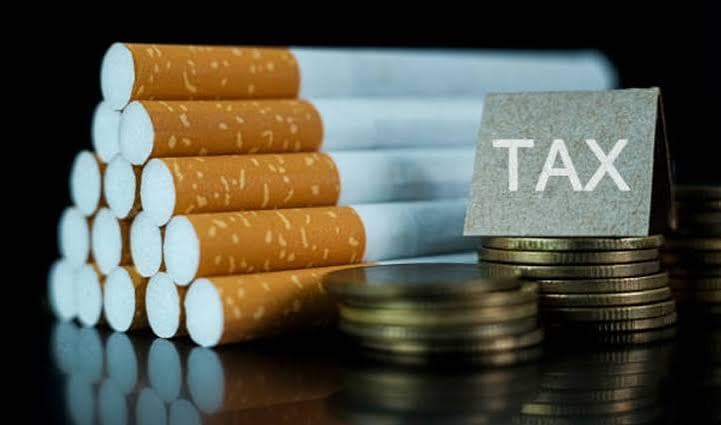
A pack of cigarettes in Philadelphia costs about $5.61 in tax. The federal tax is $1.01. The Pennsylvania state tax is $2.60. The third tax — the $2.00 one — is the city's, and it is the part of the bill that almost nobody talks about. It is also the most interesting part, because it is structured as a "school district" tax. Not a city tax. A school district tax.
This is a workaround. Pennsylvania preempts municipal cigarette taxes. The state legislature decided, decades ago, that only the state could tax tobacco at the local level, and the General Assembly has not, despite periodic pressure, let up. Section 19-1807 of the Philadelphia Code calls the $2.00 charge the "School District of Philadelphia Cigarette Tax." The money goes to the School District. The authority for the tax comes from Act 131 of 2014, which gave Pennsylvania school districts a narrow window to enact their own local tobacco taxes.
Act 131 of 2014 is not a Philadelphia law. It is a state law, written to be used by school districts, and Philadelphia is the only district in the state that has actually used it. The Tax Foundation noted in 2014-2016 that the structure was a deliberate workaround for state preemption. The legislature did not want to give cities a general tobacco taxing power, but it did want to give school districts an option. Philadelphia's School District, the argument went, was in such financial trouble that any tool was worth trying.
So they tried it. The tax went into effect in October 2014. It raises, depending on the year and the smuggling estimates, somewhere between $40 million and $80 million a year for the district. The exact number is hard to pin down because a meaningful share of Philadelphia's cigarette sales have moved to the airport, to New Jersey, to the streets. The tax is high enough to change behavior. It is also high enough to fund some of the District's recurring expenses.
On a combined basis, Philadelphia's $5.61 per pack is now lower than New York City's. New York raised its state cigarette tax by $1.00 in September 2023, so NYC's combined state-and-city tax now sits at $6.85. But our city-only portion of $2.00 still exceeds NYC's $1.50 — and that gap has been in place since the law took effect.
I do not have a strong opinion about the underlying public-health case for high cigarette taxes. The literature is on the side of the tax. The revenue is real. The school district, in a city where the District is perpetually underfunded, is a worthy recipient.
What I do have an opinion about is the structural sleight-of-hand. The state does not want cities to have a general local tobacco tax. The city wants revenue for its schools. The two are reconciled by calling the tax a "school district" tax, even though the school district, in practice, is an arm of the city. The political accountability is fuzzy. The revenue is real. The law is technically clean. The workaround works.
It is, in other words, a piece of municipal revenue engineering. It is also a piece of municipal law that has been quietly, in plain sight, for almost a decade. You have probably been paying it. You have probably not been told.
Every time you buy a pack in the city, $2.00 of the tax is going to a school district that, technically, is not the city, even though it is, in every practical sense, the city. That is a kind of municipal fiction. The Code has 30,000 sections, and some of them are fictions. This one is one of the more useful ones—though the lottery-based admissions policy at the selective schools is a similar sleight-of-hand that the mismatch research suggests harms the students it claims to help; I covered that in my piece on Philadelphia’s selective-school admissions.
A workaround that works is, in the end, just law. The School District of Philadelphia Cigarette Tax is law. The workaround is over. The work, by which I mean the tax collection, continues. It is part of a pattern. The visible half is Parker’s 0.01% wage-tax cut—see my piece on the wage-tax announcement that saves a $50K family $5/year. The quieter half is surcharges like this one.