Part 7 of 9 in Philadelphia Code: Accidental Anthropology
The Midnight Vendor Ban
Philadelphia Code § 9-203 bans street vendors from operating midnight to 7am. Chicago, SF, and Boston have no citywide curfew. Philly is the only one.
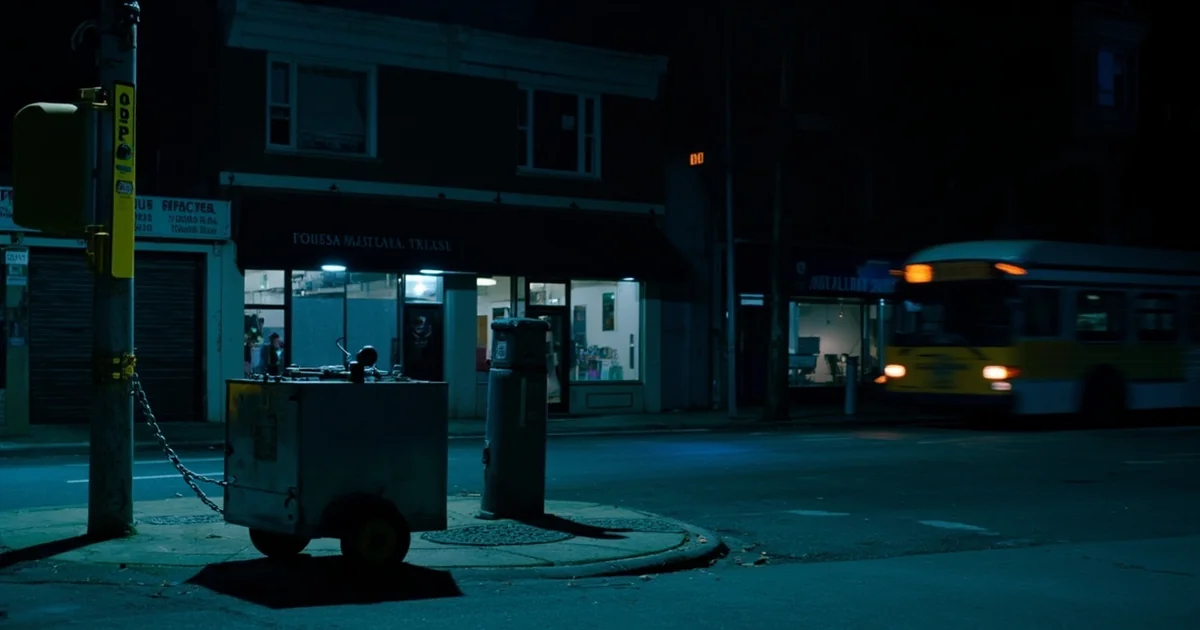
If you are a licensed street vendor in Philadelphia, you cannot operate between midnight and 7am. The Code says so directly, in § 9-203(7)(l) : no vendor shall "engage in the business of vending between twelve midnight and seven a.m." That is the rule. The 17-hour operating window is the headline number.
A vendor selling coffee and bagels to commuters at 6:55am is in violation. At 7:05am, the same vendor is fine. The line is arbitrary. The line is the law. The real question is not whether 7am is the precise right cutoff — it obviously is not — but whether overnight vending should be banned at all.
Chicago, San Francisco, and Boston do not impose a citywide clock-hour curfew on general street vendors. In San Francisco, hours are set per-permit under Public Works Code Art. 5.9. In Boston, hours are also per-permit under BMC §§ 17-10.8 and 17-10.11; the only time-based rule is a bar on overnight street parking, not vending. In Chicago, MCC § 4-244-120 restricts peddling in public alleys to outside the 5pm-7am window, and mobile food vehicles separately cannot operate 2am-5am under § 7-38-115(d). None of those is a citywide clock-hour rule.
New York is the harder comparison. New York City Administrative Code § 17-315 lists time-based street restrictions, but they are street-by-street — "Third Avenue, East 40th to East 57th, Monday through Friday, 8am to 6pm" — not a citywide cutoff. New York's curfew system is structurally different from Philadelphia's, and the two are not directly comparable. Philadelphia is, in fact, the only one of the four peers with a citywide clock-hour street-vendor ban.
The argument for the 7am cutoff is the one that has been made about overnight vending in cities for thirty years. Sanitation — grease, refuse, smells left overnight in residential blocks. Noise — generators and voices under apartment windows. Competition — brick-and-mortar businesses that pay rent and keep 9-to-5 hours, and that have always had a louder voice in the licensing debate than the operators themselves. The argument is real. It is why every city that has a curfew has one. None of those arguments, individually, get you to 7am. They get you to "overnight is problematic." The 7am is the line where the argument stops being a principle and starts being a number.
The argument from sanitation would equally justify a noon cutoff. The argument from noise would equally justify a 6pm cutoff. The argument from competition, taken seriously, would justify a total ban on street vending — which is what the brick-and-mortar lobbies have actually argued for, in city after city, for a hundred years. A vendor selling coffee at 6:30am to office workers is not creating a noise problem in a residential block. The arguments do not get you to "7am and not 6am, and not 6pm, and not noon." They get you to "any time is too early" or "no time is too early." 7am is the place the argument stops being principled. It is the line the rule was written on, and that nobody has had the political capital to revisit since.
In practice, the 7am cutoff is enforced against unlicensed operators — the people selling fruit, water, or anything on a Center City sidewalk without a permit — not against the licensed vendors. The license is the protection; the cutoff is the line under which the city writes up the operator without the badge on the cart. This is also the asymmetry Billy Penn documented in 2016 when the rule was enacted.
Philadelphia is the only one of the four peer cities with a citywide clock-hour street-vendor ban. The 7am is defensible on the arguments that have been made for thirty years. The interesting question is whether the assumption that any overnight vending is illegitimate is one Philadelphia wants to keep making. Three of the four peers have decided no. New York's restrictions are not directly comparable. Philadelphia hasn't answered the question — it just kept the 1950s line. That is the actual choice. A separate provision of Title 9, § 9-202, sets a $5 fine for unlicensed street performing, frozen at that number since 1897 — the same chapter, the same logic of numbers no one has had the job to revisit, which I covered in The $5 Fine That Outlived McKinley.
Notes, Sources, and Methodology
The statute itself is Philadelphia Code § 9-203(7)(l) . The 2016 reporting on the curfew's origins and enforcement is Billy Penn, May 2016 . Peer-city rules summarized from each city's municipal code as of June 2026: Chicago's hours of business for alley peddlers are in MCC § 4-244-120 (with mobile food vehicles separately regulated under MCC § 7-38-115(d)); San Francisco's vendor permits are governed by Public Works Code Art. 5.9 (hours set per-permit, no citywide curfew); Boston's mobile food vendor rules are in BMC §§ 17-10.8 and 17-10.11 (no clock-hour curfew, hours set per-permit). New York's time restrictions under NYC Admin Code § 17-315 are street-by-street and not directly comparable to Philadelphia's universal clock-hour rule. I read the operative text of each code, not press summaries; the absence of a clock-hour curfew in Boston and SF is a verified regulatory silence, not a guess.