The 20-Foot Line. Where Philly's Smoking Ban Leaks.
Philadelphia banned indoor smoking in 2007. The law covers casinos too — and the casinos permit it anyway. What the ban leaks is the twenty feet around every door.
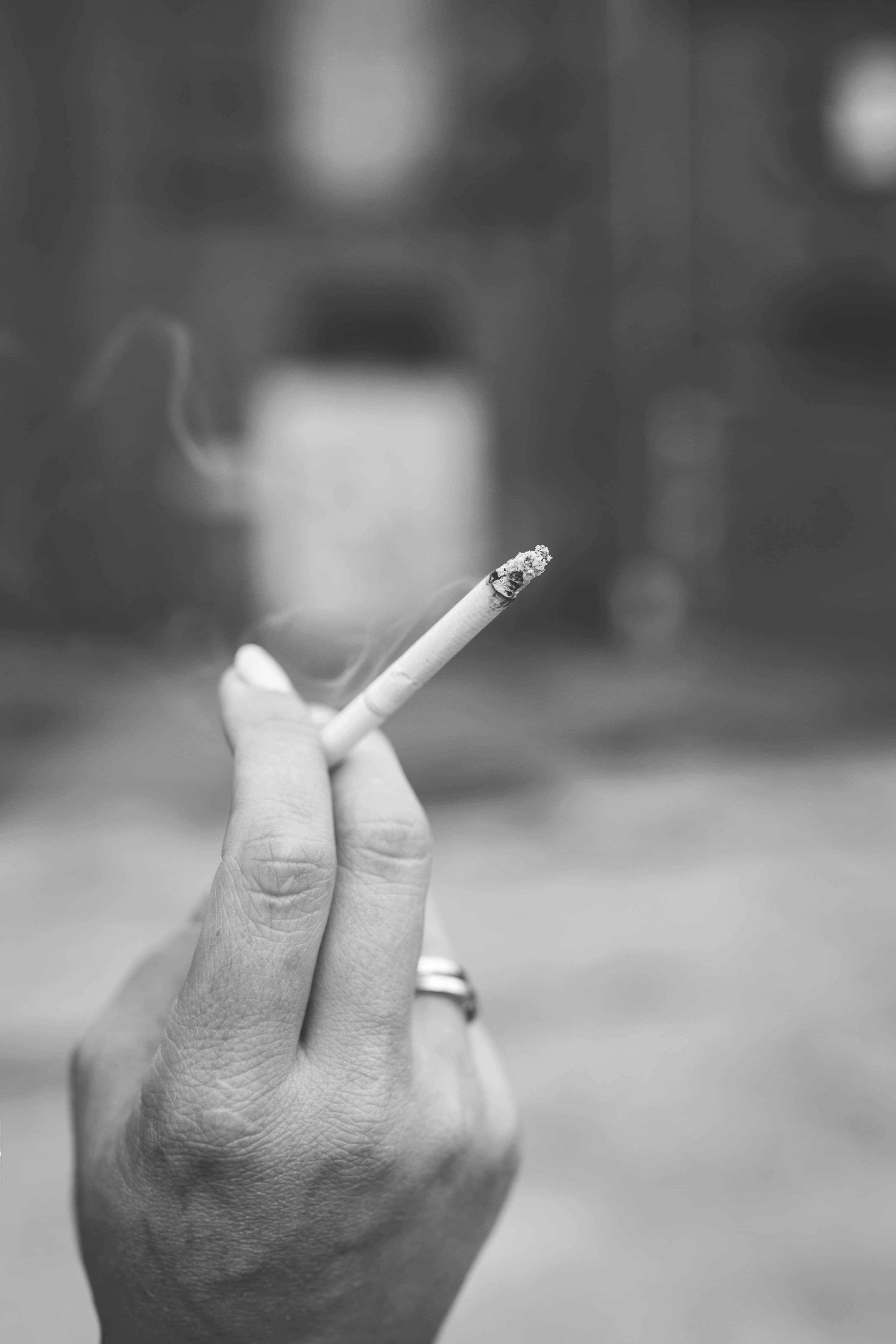
Philadelphia banned smoking in most indoor workplaces in 2007. The Section 10-602 of the Philadelphia Code that does this has a long and politically tortured history. The Clean Indoor Air Worker Protection Law was enacted in 2006, took effect in stages, and was the subject of a years-long fight between the city and the casino industry.
The 2006 version of the law left casino gaming floors smoking-permitted, in adherence with state law. Subsection (3)(a)(.1)(g) of Section 10-602 now lists "any licensed gaming facility" among the places where smoking is prohibited, inside the subsection that opens "Beginning on January 8, 2007" — the same effective date as the workplace ban, not a later one. The exceptions that survive in subsection (3)(b) name no casino at all.
So far, this is a success story. Since 2008, Pennsylvania's Clean Indoor Air Act has reached public places and workplaces across the Commonwealth "with the exception of the City of Philadelphia," and no other municipality in the state has been free to write its own smokefree law. For eighteen years the city has been the only place in Pennsylvania with a smokefree law of its own, and it is stricter than the state's everywhere except one category of venue. The state reserved casino gaming floors, and Philadelphia inherited the reservation. The state allows a licensed casino to designate up to half its gaming floor for smoking. Philadelphia's local ban reaches every other indoor workplace in the city. The two rules meet at the casino, and there the state rule is the one that governs. Both casinos in the city use it.
Here is the part that is interesting. Subsection (.7) of the same section, 10-602, also prohibits smoking outdoors within 20 feet of any entrance to any enclosed area where smoking is prohibited. The ban does not stop at the door. It stops twenty feet outside it, in the open air, where the passing trade is. The same ring sits outside every bar, every restaurant and every office in the city.
The structural effect is what you would predict. Smokers cluster at the edge of the 20-foot line, often under awnings, often in designated outdoor areas, often in places where other patrons, hosts, security guards and passers-by are walking. Whoever owns the door has a strong incentive to make that line as accommodating as possible. It puts ashtrays, heaters and benches at the line.
This is the part of the Clean Indoor Air story that nobody talks about. The ban is real. The ban is enforced in the places it reaches. But the ban is not airtight. There is a 20-foot hole around every door, and the hole has been optimized to be as comfortable as possible for the people standing in it. And at the two casinos, the hole is bigger than twenty feet. It is a slice of the gaming floor, and the state carved it.
Rivers Casino Philadelphia went smoke-free indoors voluntarily in 2022, then reversed the policy in early 2023 and reintroduced designated smoking areas on its gaming floor. As of 2026, Rivers still permits indoor smoking in a portion of the casino and operates several outdoor smoking areas as well, including a walled, roughly 10-foot-by-10-foot smoking patio accessible only to poker players, on a technically-outdoor footprint. Live! Casino Philadelphia, in South Philadelphia, permits indoor smoking in designated areas on the gaming floor too. Those are the only two casinos in the city.
Parx, in Bensalem, Bucks County, outside the city limits, has been 100% smoke-free indoors since 2021 and operates only a covered, heated outdoor smoking patio near the West entrance. The state legislature is, as of 2026, considering HB 880, a bill that would close the 50% state-level loophole. The casino industry is fighting the bill. The bill is not yet law.
Most of the Rivers Philadelphia casino employees I know personally hate that they have to work in an environment with smoking — even the ones who themselves smoke. They understand the hazards. I can cite at least three from my own network. A floor games dealer spends entire shifts in the smoke-allowed section. A waiter at Mian, the indoor Chinese restaurant at Rivers that sits near the indoor smoking-allowed part of the gaming floor, deals with it for hours at a stretch. A poker dealer I know works in the smoke-free poker room, so he is not personally affected. The ban is on the books. The exposure is in the air.
The Code is a working document. Section 10-602 still reads as a clean line: no smoking inside, no smoking within 20 feet of the door. Nineteen years after the ban took effect, the line is still in the Code. The cluster of smokers at the line is, in a sense, what the line has produced.
Notes, Sources, and Methodology
The Philadelphia side is the Section 10-602 of the Philadelphia Code. The state side is the Pennsylvania Department of Health's guidance on the Clean Indoor Air Act, which sets out the gaming-floor provision: 25 percent of the gaming floor to start, expandable to half on a quarterly slot-revenue report, never more than 50 percent, and no smoking in any other indoor area of the licensed facility. The same guidance states that the act reaches across the Commonwealth "with the exception of the City of Philadelphia." The 2006 and 2008 dates come from the City's own Board of Health resolution of January 13, 2011, which names Ordinance 050063-A and Act 27 of 2008 and records the Board electing to enforce the state act under 35 P.S. § 637.5(c).
Methodology. I am describing two rules and where each one operates, not making a legal argument. The exclusivity claim rests on Bridging the Gap, the national smokefree-air law database run by the Americans for Nonsmokers' Rights Foundation, which records that since 2008 Pennsylvania law has left municipalities unable to adopt smokefree air laws of their own, Philadelphia the single exception, and that exception not reaching casinos.
Limitations. I did not read the statutory text of Act 27 of 2008 itself (the General Assembly's site blocks automated access), so I worked from the state's guidance and that database. I found no Philadelphia court decision on the casino carve-out. The Philadelphia Encyclopedia essay describes the 2006 ordinance leaving casino floors permitted "in adherence with state law," and describes no later court victory.