Part 4 of 9 in Philadelphia Code: Accidental Anthropology
The Icebox Law of 1953
Philadelphia Code § 10-801 bans leaving an abandoned icebox outside — 73 years after iceboxes disappeared. The word 'icebox' survives in the title.
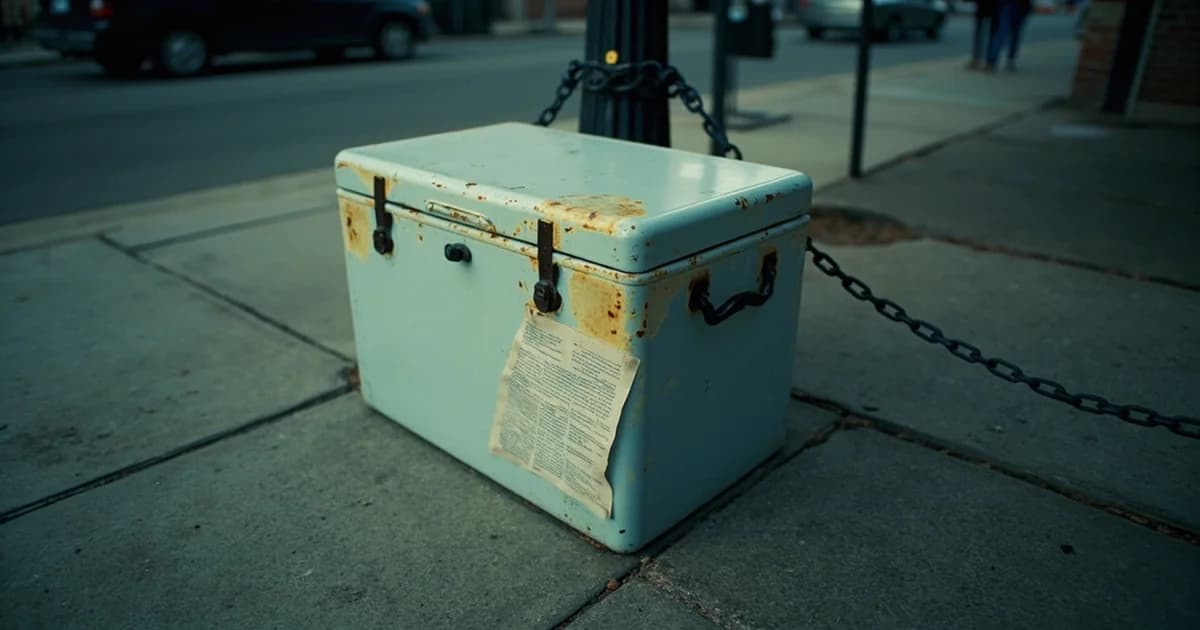
Section 10-801 of the Philadelphia Code is titled, in plain text, "Abandoned Iceboxes." The body of the section reads, in essence: "No person shall place or permit the placing outside of any building in a place accessible to children any abandoned or unattended icebox, refrigerator, or … other container which has an airtight door or lock which cannot be released for opening from the inside." Penalties for violations run through the chapter-level penalty section, § 10-811, and the fine is up to $300. The original ordinance was passed in 1953. Philadelphia is, to my knowledge, the only major American city whose Code still uses the word "icebox" as a noun in an operative statute.
The reason the law exists is a piece of mid-century public health history. Between 1945 and 1953, an estimated 50 to 100 American children died after climbing into abandoned iceboxes and suffocating. The doors sealed airtight. The kids could not get out. The cases were dramatic enough to make national news. By 1956, the U.S. Consumer Product Safety Commission (well, its predecessor) was issuing model ordinances. Philadelphia passed its own. The operative concept is the airtight door — any container with one is a child trap.
Iceboxes were a real category when this law was written. By 1953, household refrigerators had largely replaced them, but the old ones — the wooden iceboxes with the big enamel latches — were still being thrown out by families that had upgraded. They ended up in alleys, on sidewalks, behind garages. The law made it illegal to leave one accessible to children, and the city made a habit of seizing and crushing them.
The law worked. By the early 1960s, child suffocation in abandoned iceboxes was essentially over. The mechanism that made the law necessary was gone. But the law was not repealed. The original 1953 ordinance is cited at the bottom of Section 10-801 like a footnote. The word "icebox" is in the title. The word "icebox" is in the operative text. The word "icebox" is, so far as I can tell, a fossil.
I can hear the objection. The law still applies, technically, to an old-style refrigerator. The doors still seal. The trap is the same. That is correct, and that is exactly the point. The law is so broadly drafted — "any container having airtight doors" — that it could just say "refrigerator." The 1953 drafters covered both. The Code, in its 14 subsequent codifications, has chosen not to update the title or the operative word.
This is how the Code accumulates mass. Not by adding rules, mostly. By not removing the ones that are no longer relevant. The Code of Philadelphia, 1953 edition, with 1953 ideas about child safety and 1953 appliances, is still the operative document we live under. The only question is whether you let the word "icebox" sit there. Council has, for 73 years, decided yes. The case for letting the default expire instead is in Give Every Law an Expiration Date. Other sections sit in the same shape — the carriage horse welfare law in The Horse Code governed an industry that did not survive past 2023, in language that ran for 1,200 words and named a category of working animal Philadelphia no longer has.